

Opening: 29 October, 19:00, followed by an artist- and curator-led tour with Polish Sign Language interpretation by Elżbieta Resler
Duration: 30 October–5 December 2026
Opening hours: Wednesdays and Thursdays, 17:00–20:00
Venue: GUA Collective, ul. Ruska 46A, 4th floor, unit 401.4

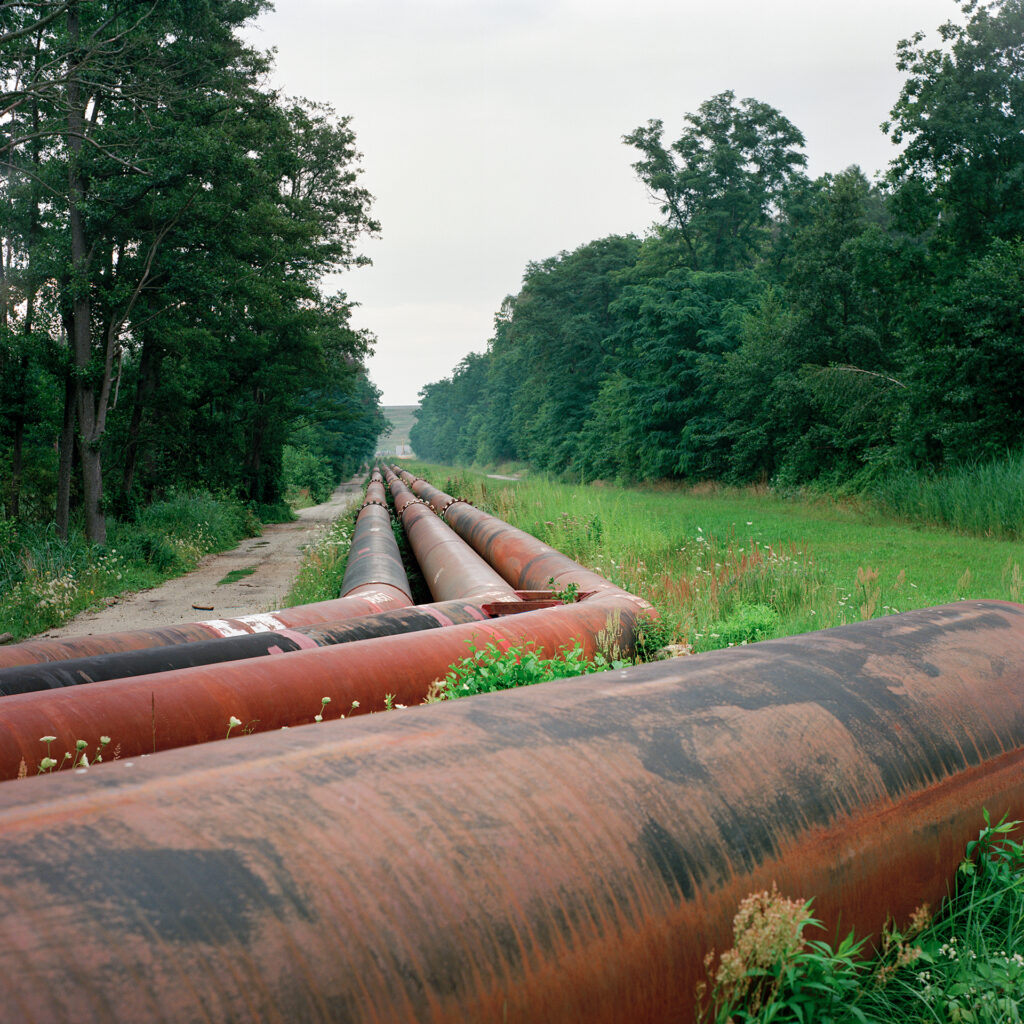
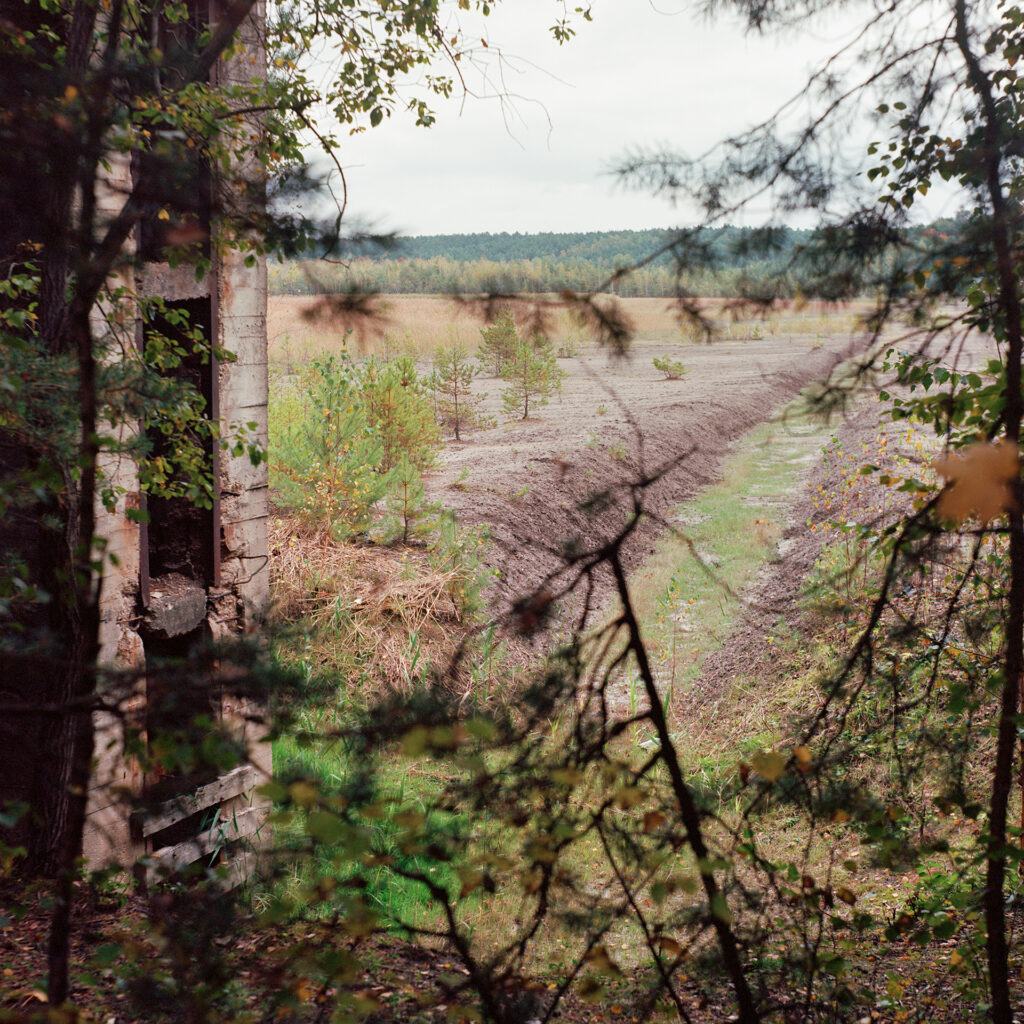
‘Visible Water Evidence. Flotation of Post-Industrial Landscapes’ offers a perspective on the bodies of water in Lower Silesia that emerged as a result of the ‘industrial’ transformation of the environment. These include flotation tailings ponds and fish ponds, retention reservoirs, post-mining lakes, canals and former riverbeds shaped by regulation works, weirs, locks and recreational facilities.
We look at them through various ‘apparatuses’ (photographic: digital and analogue images; cartographic; archival and local heritage). The concept that helps us interpret these views is flotation. In industry, it refers to a process of separating and concentrating minerals, in which some particles rise to the surface while others sink. For us, it is a way of perceiving water – not only as a resource used by humans, but also as matter involved in complex ecological, social and economic processes. In the exhibition, flotation metaphorically separates what is obvious from what usually remains invisible. It reveals blurred traces of memory and underlying phenomena taking place in the environment. It suggests alternative visions of the future.
A ‘biocentric perspective’ is essential here, one in which humans are not the sole point of reference. Water bodies and waterways are understood as mediums of complex relationships between water, soil, plants, animals, microorganisms and people. The exhibition explores not only their industrial functions and histories, but also the processes that unfold after they are no longer used for industrial purposes: renaturalisation, or spontaneous secondary rewilding, and reclamation, which involves introducing new forms of use.
The project does not seek to idealise the industrial past or overlook the environmental problems associated with it. On the contrary, it proposes a critical yet utopian perspective on the future of places whose functions and significance may change. Photographs, film and sound materials, and a spatial installation direct our attention towards what is only just beginning to emerge: new relationships, forms of life and ways of coexisting. Towards landscapes that are no longer merely remnants of the past, but are becoming new public, recreational and cultural spaces.
Accompanying events:
18 November (Wednesday), 18:00
‘Post-Industrial Waters’ – a guided tour of the exhibition led by Professor Marta Tomczok
The tour will expand on the exhibition’s exploration of industrial waters in Lower Silesia by looking at similar processes in Upper Silesia: the relationship between water and mining, industrial methods of using and transforming water, and what remains after mines cease operating. The starting point will be flotation tailings ponds and mine water, as well as the Kłodnica and Rawa rivers, which for decades served as recipients of wastewater, transport routes for coal and parts of the industrial infrastructure. An important topic will be the flooding of mines and the pumping of water out of them, along with the resulting transformations of Silesia’s water systems. The tour will also explore themes discussed by Marta Tomczok in her latest book, ‘Scars. Post-Industrial Landscapes’, which examines the traces of industrialisation inscribed in the landscape and human memory.
Marta Tomczok is a literary historian whose current research focuses on the memory of heavy industry. She collects and archives oral histories of mining workers. She is also interested in the environmental and social consequences of industrialisation. She has received a scholarship from the Marshal of the Silesian Voivodeship and awards in competitions organised by the National Science Centre. She is the regional representative of the European Society for Environmental History. She works at the Faculty of Humanities of the University of Silesia in Katowice. She is the author and co-author of several books, including ‘Scars. Post-Industrial Landscapes’.
Date and title to be confirmed
A guided tour of the exhibition led by Professor Marek Kasprzak
5 December (Saturday), 17:00
Finissage tour led by the artist and curator, with audio description by Magdalena Mądra

The initiative is funded by a scholarship from the City of Wrocław.
